Fly Fishing in Central & Eastern Hokkaido
Central and eastern Hokkaido is a fly fisher's paradise filled with wild trout, char, and salmonid-rich rivers. Within about a 1.5-hour radius of Furano and Tomamu, numerous mountain streams and river systems offer pristine habitats for wild populations of rainbow trout, white-spotted char, yamame (masu salmon trout), and more, without the crowds or artificial stocking of tourist fisheries.
We guide fly fishing throughout Central Hokkaido, using our local knowledge to choose zones based on water levels, weather, and conditions. This is where you go when you want the real Central Hokkaido fly fishing experience: wild fish, real water, and the kind of solitude that's getting harder to find.
Top Wild Trout & Char Rivers Near Furano and Tomamu
Sorachi River & Tributaries
The Sorachi River flows through the Furano area and is renowned for its wild salmonids. While the lower Sorachi is dammed and supports agriculture, the upper reaches remain largely untouched, featuring crystal-clear flows and rich fish life. Upper Sorachi tributaries even harbor rare native Ito (Sakhalin taimen), an indicator of the river's ecological health.
Anglers will encounter wild rainbow trout, white-spotted char (iwana), and yamame (landlocked masu salmon) throughout the Sorachi system. These streams typically feature long deep runs and boulder-strewn pocket water. The Sorachi is generally accessible via road crossings near Furano and Minami-Furano. Fishing pressure is moderate, but it's usually easy to find solitude on a weekday or by walking away from access points.
Mu River (Mukawa)
Originating on the slopes of Mt. Karifuri near Tomamu, the Mu River (also called Mukawa) flows south through the Hidaka Mountains toward the Pacific. This 135 km long river is one of Hokkaido's "Class A" waterways and remains relatively pristine, with about 80% of its basin forest-covered.
The Mu's upper and midstream reaches harbor wild trout and char in fast, oxygen-rich waters. Expect yamame (masu trout) and white-spotted char as the primary natives, along with introduced rainbow trout. The river's character is steep and rugged, cascading through bouldery rapids and narrow gorges. Access can be challenging, but the payoff is very low fishing pressure and truly wild fish. Be prepared for swiftly changing water levels and exercise caution in the Mu's strong currents. Bear safety is essential here.
Tokachi River & Tributaries
The Tokachi River system to the east is considered the mecca of trout fishing in Japan. Within reach of Tomamu (an hour drive to upper Tokachi) or a bit farther from Furano, the Tokachi and its many tributaries offer tremendous variety. The river drains a huge area from the Daisetsuzan National Park down to the Pacific, and hosts an array of salmonid species rarely all found together elsewhere.
In the Tokachi basin you'll find native white-spotted char and Dolly Varden, yamame and even anadromous cherry salmon in season, chum and pink salmon runs in lower reaches, the elusive Sakhalin taimen in select remote tributaries, plus self-sustaining populations of introduced rainbow and brown trout. Most of these fish are beautiful and truly wild, reproducing naturally. Access in the Tokachi basin is relatively easy with many bridge crossings and river park areas. The system is so large that you can still find plenty of unpressured water by exploring lesser-known creeks or stretches away from towns.
Chūbetsu River
Flowing out of Daisetsuzan National Park to the northwest of Furano, the Chūbetsu River is another excellent wild trout stream reachable in about an hour. The upper Chūbetsu below the dam is especially attractive: despite the dam, the outflow is gin-clear, cold, and nutrient-rich. White-spotted char (iwana) thrive here in the colder waters, and you'll also find yamame trout in the middle-lower sections. The Chūbetsu's reputation is more for quantity of smaller native fish rather than trophy-sized specimens. Access is very straightforward with a road paralleling much of the river. Fishing pressure is moderate to low, and you can usually have a stretch to yourself, especially on weekdays.
Species & Seasonal Patterns
Central and eastern Hokkaido's rivers boast an impressive lineup of salmonids. Anglers can target several species depending on the river and season.
White-spotted Char (Iwana)
A native char found in cold, fast-flowing streams. They have pale spots and a yellow sheen, and larger ones (especially the "Amemasu" form that migrates within rivers or lakes) can reach 50+ cm and fight ferociously. Char are often caught in deeper pools or runs and readily rise to dries in summer. They spawn in autumn. By early fall they exhibit vivid colors.
Yamame / Masu Salmon
Yamame are the beautiful landlocked form of cherry salmon, sporting par marks (dark oval spots) on their sides. They inhabit many streams here. Typically 6–10 inches, a big yamame might be 12–14 inches. They are aggressive surface feeders in summer. The sea-run form (sakuramasu) enters larger rivers (Tokachi, Mukawa, etc.) from spring to early summer to spawn. Those anadromous fish are off-limits to intentional fishing (must be released if caught).
Rainbow Trout
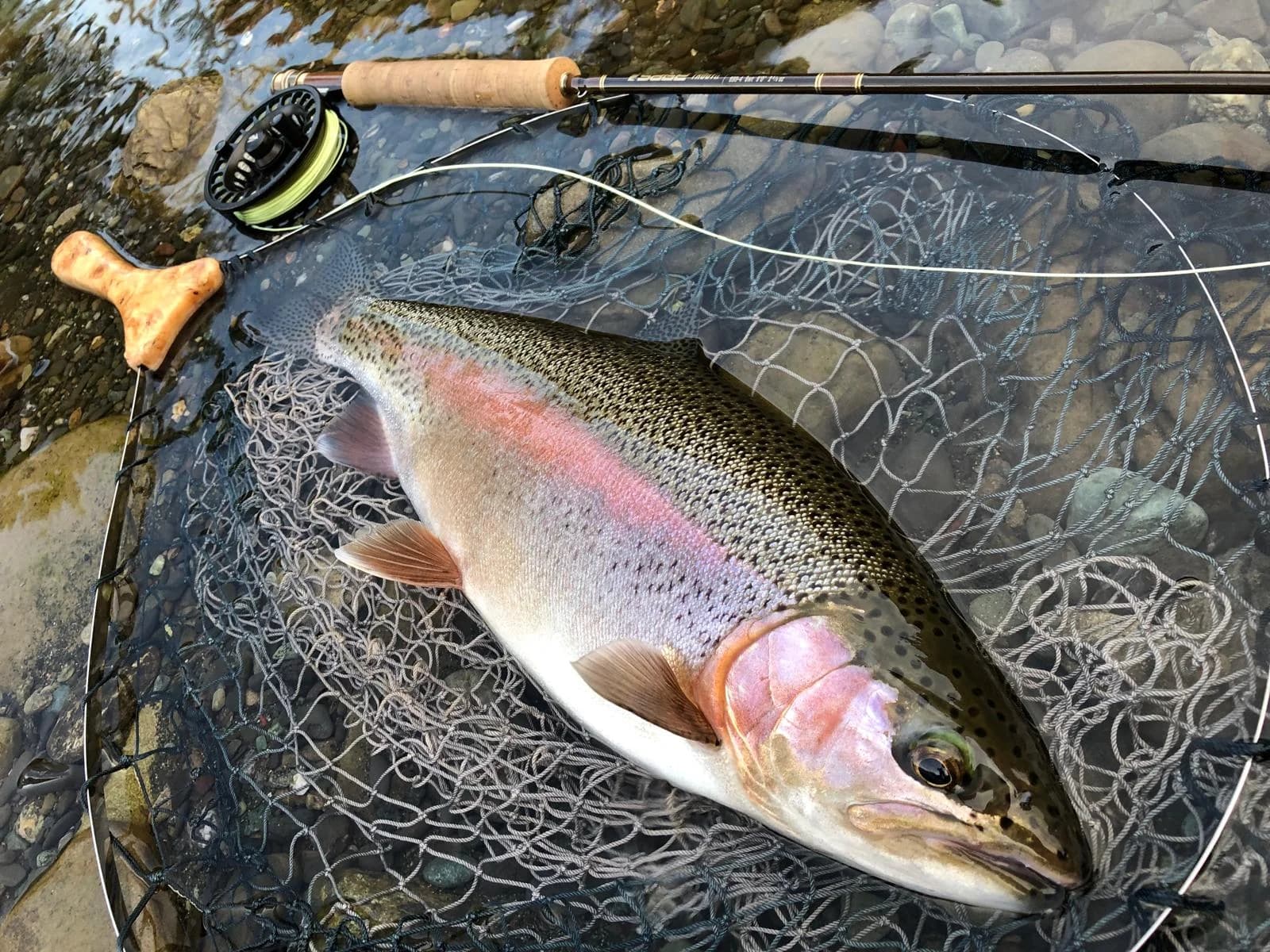
Introduced a century ago, rainbows have naturalized in Hokkaido and are now a staple sportfish in these rivers. Wild rainbows up to about 20 inches are possible in richer systems (Tokachi, Sorachi), though 8–16 inches is more common. They thrive in lower elevations and below dams, and tend to hit nymphs, streamers, and even dries aggressively. Rainbows spawn in spring (April–May), so by late spring (May–June) they are hungry post-spawn and very active.
Dolly Varden Char (Oshorokoma)
Locally called Oshorokoma, these smaller native char favor cold headwaters. They are known for their striking orange spots and fins. In large rivers or lake-run forms they can reach a kilo or more, but in small streams they're 5–8 inches typically. Dolly Varden spawn in fall. They often share habitat with white-spotted char but tend to stick to higher gradient creeks.
Best Times to Fish
Late Spring (May–June)
Late spring is an excellent time across species. As temperatures rise and snowmelt recedes, trout and char feed aggressively. Expect high water in early May from snow runoff, but by mid-May levels stabilize and clarity improves. Aquatic insect hatches (caddis, mayflies, stoneflies) start to pop off. You'll see yamame sipping emergers and char smashing large dries in pocket water. This period also coincides with post-spawn feeding for rainbows and pre-spawn staging for yamame/char, so fish are active all day. May–June is prime for nymphing the deeper runs and throwing bushy dry flies in the shallows on warmer afternoons. Keep in mind that in higher elevation streams (Daisetsuzan area), spring comes later. Some headwaters may still be very cold or even partially snow-bound in early May. By June, however, even the mountain creeks are in great shape. Overall, mid-May through June sees some of the year's best fishing before the summer heat sets in.
Early Fall (September–October)
Early fall is another peak season. As nights cool and occasional rains refresh the rivers, trout and char put on the feedbag. September often brings a second wind to dry-fly fishing. Landlocked yamame and char are fattening up for winter or heading upstream to spawn, and they'll strike at terrestrial patterns (hoppers, ants) as well as nymphs. Many local anglers prefer the fall: fewer tourists, gorgeous autumn foliage, and fish that are both hungry and at peak size. By October, be aware of spawning activity and avoid wading through redds. In larger rivers, salmon runs peak in fall, which can create egg-feeding opportunities for rainbows and char. The sweet spot is September to early October for consistent action.
Keep in mind: conditions change daily. Water levels, weather patterns, and fish behavior shift with each storm, temperature swing, and snowmelt pulse. What worked last week might not work today. A local guide assesses these conditions in real time and adjusts the plan accordingly.
Accessibility, Regulations & Local Etiquette
One of the great advantages of Hokkaido fishing is the ease of access and simple regulations. No general license is required for river fishing in Hokkaido. It's free and open to the public in almost all streams. This contrasts with most of Honshu where local fishing association permits are needed. In Hokkaido, you can simply grab your rod and go.
The main regulatory restriction to remember is the rule on salmon: targeting anadromous salmon (chum, pink, cherry salmon) in rivers is illegal. These fish are generally protected for spawning runs. If you accidentally hook one while trout fishing, you must release it immediately and gently. Catch-and-release of all trout and char is not mandated by law but is highly encouraged. Virtually all guides and experienced anglers practice C&R to conserve the wild stocks. Keeping the odd rainbow or char for dinner is not culturally offensive (locals sometimes do), but given these fish are slow-growing wild natives, it's best to release them.
In terms of access, Hokkaido is sparsely populated and land ownership is less of a barrier than in more crowded regions. Riverbanks are often public domain up to the high-water mark. You can usually park near a bridge or pull-off and walk along the banks or in the riverbed without issue. If crossing through farmland or passing a house, be courteous. A polite nod or greeting can go a long way if you see anyone.
While access is generally straightforward, knowing the best entry points, parking spots, and which stretches are currently fishable requires local knowledge. A guide can maximize your time on the water by taking you directly to productive sections and avoiding areas that are blown out, too crowded, or recently fished.
Bear Safety & Local Considerations
The region's Ussuri brown bears (higuma) are a real presence. While attacks are rare, it's mandatory in some areas (and wise everywhere) to carry a bear bell on your pack and even bear spray in more remote valleys. Make noise while walking through thick brush, especially near streams where the sound of water can mask your approach. Summers in Hokkaido are pleasant, but mosquitoes and gnats can be relentless in streamside forests. Always be prepared for rapid weather changes. Mountain weather can turn on a dime, and heavy rain can cause flash floods.
Bear activity, recent sightings, and local conditions change throughout the season. A guide who lives here year-round knows which areas to avoid, which access points are currently safe, and how to read the signs that indicate recent bear activity. This local knowledge can make the difference between a great day and a dangerous situation.
Pressure & Remoteness
Compared to popular trout fisheries elsewhere in the world, Hokkaido's central/eastern rivers feel virtually untouched. There are no combat-fishing scenes or packed parking lots here. At most, you might see a couple of local spin fishermen near a bridge, or a guide with clients on a well-known stretch. Thanks to the sheer number of streams, you can find lonely water with ease.
Some easily accessed spots do get fished regularly, which can make the trout a bit warier there. However, even the "popular" Sorachi tributaries around Furano still produce plenty of fish for those willing to walk up or downstream a little. Many anglers coming from abroad are amazed that in the peak of summer, they had an entire valley to themselves. Remoteness in this region is a spectrum: you can choose your level of adventure.
Why We Guide Here
This is where we live, and it's where the real fly fishing experience happens. The flexibility to move between zones based on water levels and weather is what makes Central Hokkaido fly fishing special. We guide experienced fly anglers who want real water, real pacing, and a guide who actually grew up here.
Whether you're looking for full-day trips or multi-day fly fishing trips in Hokkaido, Central Hokkaido offers the variety to make it work. This is fly-only guiding for people who care about the fishing itself.
Ready to plan your Central Hokkaido fly fishing trip?